
In-Depth Look at DTF Screen Printing Issues and Solutions for Screen Printing Shops
In the current screen printing industry, DTF (Direct to Film) technology has become a crucial element that helps screen printing shops produce beautiful, sharp, and vibrant designs while handling small orders without the need for complex screen block costs. However, despite DTF being a modern and convenient technology, it still has a “weakness” that every screen printer is well aware of: its sensitivity to “weather conditions.”
Thailand is a hot country, and as summer sets in, the extreme rise in temperature combined with fluctuating humidity levels turns into a significant challenge that disrupts the previously smooth DTF printing process, leading to numerous issues, frequent defective work, and escalating costs. This article will take readers, especially new screen printing shop owners, through an in-depth look at the real reasons why hot weather affects DTF printing and what techniques can be used to maintain premium printing standards throughout.
Understanding the “Heart” of DTF: Chemically Sensitive to Heat
Before diving into the problems, it’s essential to understand the DTF process. DTF is not just about printing ink onto a film; it’s a complex chemical reaction between DTF ink, PET film, and hot melt powder. Heat is a crucial catalyst in the powder melting process, which adheres the design to the film. However, when ambient temperature (room temperature) is too high during summer, it disrupts these reactions at every step.
Problem 1: Ink Drying and Clogging
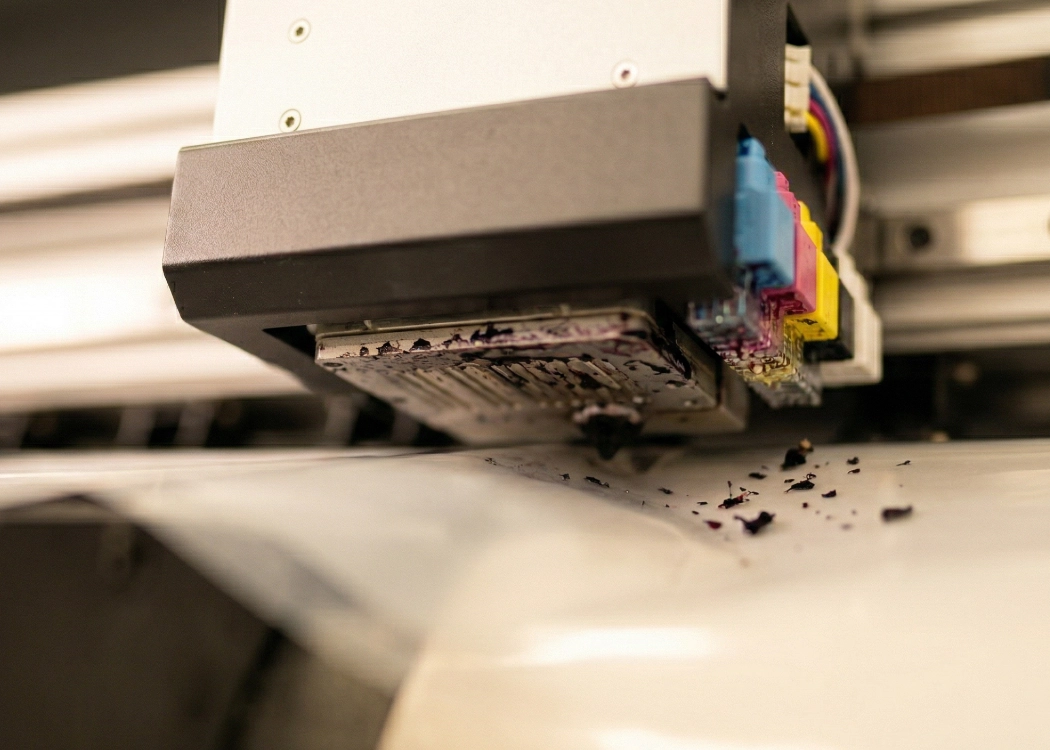
This is the nightmare of DTF screen printers during summer. Room temperatures above 30-35 degrees Celsius cause the solvent in DTF ink to evaporate too quickly, especially at the nozzle tips.
Impacts:
- Clogged nozzles: Dried ink at the nozzle tips blocks ink flow, causing broken prints, color distortion, or no ink output at all.
- Incomplete prints: Frequent machine stops for nozzle cleaning waste time and ink.
- Permanent damage to nozzles: If left unattended, dried ink inside the nozzles can cause permanent clogging, requiring expensive replacements.
Problem 2: PET Film Instability
PET film used in DTF has a special coating to accept ink. In hot and dry conditions, this coating may lose moisture, making the film brittle. Conversely, in hot and humid conditions, the film may absorb too much moisture.
Impacts:
- Warping: Warped film causes the printer rollers to pull the film unevenly, leading to distorted prints or film jams.
- Registration issues: In extreme heat, the film may expand slightly, causing white prints to misalign when printing over colors.
- Blurred edges: Excessively hot or humid film may cause ink to spread unevenly, making the edges of the image blurry.
Problem 3: Hot Melt Powder Issues
Hot melt powder is crucial for adhering the print to the fabric. In humid summer conditions, the powder may absorb moisture, clumping together. More seriously, the powder may melt prematurely.
Impacts:
- Premature melting: High room temperature combined with heat from the powder applicator may cause some powder to melt before curing, leading to uneven powder distribution and sticking in unintended areas.
- Poor adhesion: In extremely hot and dry conditions, printed ink may dry too quickly for the powder to adhere properly, causing the screen print to peel off after washing.
- Sticky film: After curing, the film may become abnormally sticky, causing excess powder to ooze around the edges when pressing onto fabric.
Problem 4: Machine Overheating
Not only do materials struggle with heat, but the printers and curing machines also face tough conditions in summer. DTF printers have electronic components and motors that require good heat dissipation.
Impacts:
- Machine shutdown: Control boards may shut down if temperatures get too high.
- Motor damage: Motors pulling the film and nozzle motors work harder, risking premature damage.
- Inconsistent curing: Curing machines may struggle to maintain temperature, leading to uneven powder curing.
Problem 5: Increased Quality Control Difficulties
The fluctuating weather conditions in summer make quality control more challenging, requiring constant monitoring of humidity and temperature.
Impacts:
- Color variations: Printing the same design in midday heat versus cooler evening temperatures may yield slightly different color results.
- Frequent adjustments: Adjusting heat press settings to accommodate changing film conditions in summer may be necessary.
Techniques to Handle and Prevent DTF Printing Issues in Summer
Despite the summer being a significant obstacle, with proper preparation and adapting the environment, screen printing shops can continue operations without major issues.
1. **Control the Environment: Air Conditioning is the Answer
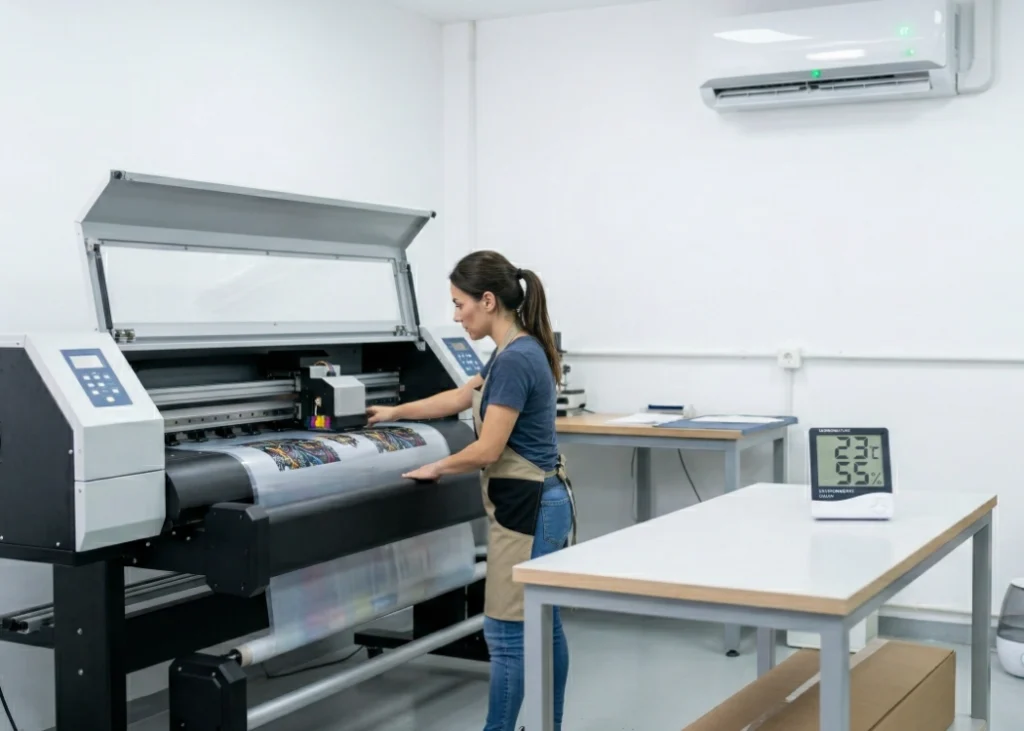
This is the most efficient solution. A DTF printing studio should be a closed system that controls temperature and humidity.
Temperature: Maintain the temperature between 20-25 degrees Celsius, which is the optimal range for ink and printers to function well.
Humidity: Keep the relative humidity in the room at around 40%-60%. Using a humidifier in the air-conditioned room will help prevent clogging.
2. Managing Materials: Keep Them Away from Heat
Ink: Store DTF ink in a cool, dry place away from direct sunlight.
Film: Store film in a well-ventilated area and seal the bag tightly after each use to prevent moisture.
Powder Adhesive: Store powder adhesive in a vacuum-sealed plastic container and may include desiccant packets.
3. Adjusting Printer Settings: Work According to the Weather
Increase the frequency of printhead cleaning: Clean the printhead before starting work and may clean it briefly during work if printing small areas of color.
Adjust ink volume: On very hot days, you may need to slightly reduce the amount of white ink (white ink limit) to prevent white ink from bleeding.
Maintain the printer: Regularly clean the wiper blade and capping station to prevent ink from drying and clogging.
4. Post-Printing Care: Remove Moisture Before Heat Pressing
Pre-press the shirt: Before heat pressing the film onto the shirt, run an empty shirt through the heat press for about 3-5 seconds to remove moisture accumulated in the fabric fibers. This will help the DTF adhesive adhere better.
Summary
Summer is the most challenging time for DTF printing shops. However, heat is not an insurmountable problem if we understand the chemical reactions of materials and have good environmental control. Investing in air conditioning or humidity control equipment may seem like an initial cost increase, but compared to the losses from defective work, damaged printheads, and lost time, it is a worthwhile investment. Regular maintenance of printers and proper storage of materials will help your shop produce high-quality, sharp, and durable screen prints sustainably, even on the hottest days.
Ready to Print Custom DTF with Screen168 Bangkok?
Single pieces to bulk wholesale. Free artwork file check and instant online pricing 24/7.
🚀 View Sizes, Prices & Order Online→