
How to Design T-Shirts that Customers Love: Professional Designer Tips
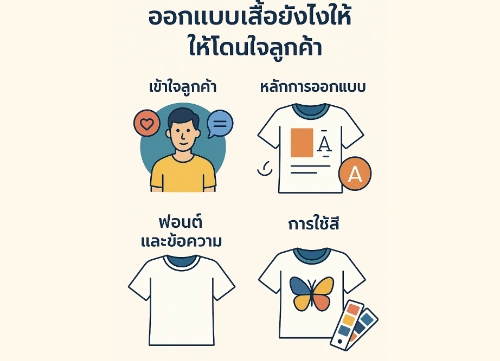
The most challenging aspect of T-shirt printing is designing the print, as even the most beautiful print won’t sell if it doesn’t resonate with the audience. This article will guide you through the design techniques used by graphic designers.
In today’s era, ordering custom T-shirts is much easier than before. Previously, traditional silk screen printing was commonly used, making it less popular to print unique designs due to the need for large order quantities. However, with the advent of DTF printing systems, it’s now possible to cater to individual customers, allowing for orders as small as a single piece. In short, with a design provided, you can get a high-quality, detailed T-shirt that matches your vision.
Many graphic designers have turned to designing T-shirts for sale, but creating a design that truly resonates with the audience isn’t just about aesthetics; it must communicate effectively, align with the target audience’s preferences, and have a unique charm that keeps people wanting to wear it without getting bored.
For those starting a T-shirt business or designers looking to create their own work, this article will help you understand what designing a T-shirt entails and how to make it truly appealing to your customers.
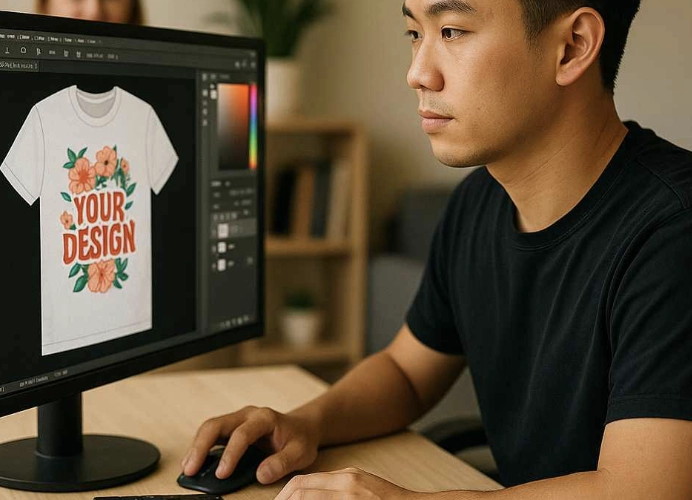
Start by Understanding the “Customer” Before the “Design”
Good design often begins with the question, “Who will wear this T-shirt?” Since different age groups have varying preferences, some may prefer bold, large designs, while others might lean towards minimalist styles. Therefore, graphic designers should start with the following steps:
1.1 Identify the Target Audience
Consider the age group—teenagers, working adults, or seniors—and assess the overall style and communicate effectively with the customer. Some may focus on lifestyle or fashion, while others might prefer rugged or text-heavy designs that reflect personal identity. Additionally, understand the customer’s budget to create a realistic design.
1.2 Understand the “Taste”
If the customer is unsure about their preferred style, ask for social media pages like Facebook or Instagram that the target audience follows to gather ideas. For example, if designing for a travel-themed T-shirt, consider travel-themed illustrations, minimalist designs, or Japanese graphics.
Next, let’s look at the design techniques used by graphic designers:
4.1 Consider the T-Shirt Color
Dark colors (black, dark gray) are best for light designs, while light colors (white, light gray) work well with dark or gradient designs. Ultimately, the choice depends on the customer’s preference.
4.2 Understand the “Meaning of Colors”
Choosing colors that align with the overall design is crucial. For example:
- Red = Power, intensity
- Blue = Trustworthiness
- Yellow = Joy, cheerfulness
- Black = Mystery, luxury
Knowing the meaning of colors helps in selecting the right ones for the design.
4.3 Avoid Using Too Many Colors
Especially for silk screen printing, the more colors used, the higher the cost. DTF printing is recommended for designs with multiple colors. Minimalist designs with 1-2 colors are versatile and suitable for most T-shirts.
5.1 Center Chest
A popular position that allows clear visibility of the print, suitable for both text and images.
5.2 Left Chest Corner
Ideal for brands or small logos, giving a premium and cohesive look. Small but distinctive.
5.3 Full Body / Full Back
Suitable for detailed artwork or illustrations, often used for event, concert, or fashion designs.
5.4 Lower Chest / Sleeve
Less common but highly eye-catching, as it’s an uncommon printing spot. However, printing on sleeves can be more challenging.
6.1 Type of Fabric
For group or retail T-shirts, choose soft, breathable fabrics like 100% cotton. For fashion, oversized T-shirts are popular in cotton, but other fabrics with unique properties can also be used.
6.2 Proportion of the Design
Large designs on small T-shirts can look cramped, while small designs on oversized T-shirts can appear scattered.
6.3 Use Mockups to Visualize
Before production, mockups help visualize the final product, making it easier to assess the overall design.
In conclusion, a good design is one that people want to wear repeatedly. Creating a T-shirt design that resonates with the audience isn’t just about aesthetics; it must communicate effectively, align with the target audience’s preferences, and have a unique charm that keeps people wanting to wear it without getting bored. Understanding the customer’s heart is the foundation of successful T-shirt design.
Finally, a single T-shirt can be fashion, emotion, memory, or even the starting point of a big brand. Designing with understanding is the basis of everything.
Ready to Print Custom DTF with Screen168 Bangkok?
Single pieces to bulk wholesale. Free artwork file check and instant online pricing 24/7.
🚀 View Sizes, Prices & Order Online→