
Steps to Start Selling Custom T-Shirts Online with DTF System
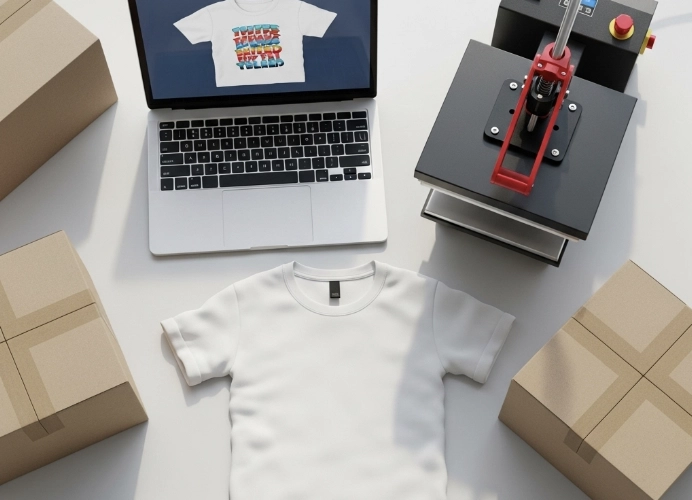
Selling t-shirts online has become one of the most popular careers for the modern era. Whether you are an artist, a designer, or a new business owner, owning a t-shirt brand and printing t-shirts for online sales is no longer out of reach in the digital age, especially with the advent of technologies like DTF (Direct to Film) printing systems that make high-quality t-shirt production easier, sharper, and more detailed, without the need for large stock inventories as in the past. However, before you reach the point of receiving constant orders, being well-prepared is the most crucial aspect.
This article is a comprehensive guide from Screen168 that will take you through every step to prepare for starting this business seriously, from planning to selecting tools and online marketing. This article will walk you through everything you need, from equipment and tools to management concepts, to help you start professionally and minimize trial and error costs.
Part 1: Laying a Solid Business Foundation
Before investing in machines or materials, a clear business plan is the first step towards success.
1. Find Your Niche and Define Your Target Audience
The t-shirt market is highly competitive. Being a “t-shirt for everyone” brand may leave your brand without a clear identity. Try to find a niche or a specific market that you are interested in and understand, such as:
By Interest: T-shirts for cat lovers, board game enthusiasts, camping fans, or artist fans
By Style: Minimalist designs, streetwear, 90s graphic designs, couple t-shirts
By Message: Inspirational quote t-shirts, funny sayings, trending phrases
Once you know your target audience, you can design patterns, write content, and run ads more effectively by focusing on your target audience. Keep an eye on social media trends and produce products that meet current demands.
2. Create a Brand Concept
When people think of a brand, they usually think of the logo, but a brand is more than just a logo. A brand is the identity and story that communicates with customers. Define these clearly:
Brand Name: Easy to remember and reflects what you do
Logo and Color Scheme: Create recognition and reflect the brand’s style
Brand Story: Why did you create this brand? A story can create an emotional connection with customers and help them understand the owner’s mission.
3. Financial & Cost Planning

Evaluate the initial budget and calculate the cost of screen printing per item accurately. Major expenses will include:
Variable Costs (per unit): Cost of blank shirts, DTF film, ink and powder, packaging. The shirt is the star of this business. Choosing good quality fabric will impress customers and encourage repeat purchases.
Fixed Costs: Equipment costs (if investing in your own), rent (if applicable), marketing costs, online platform fees

Knowing the cost per unit will help you set competitive prices that allow for profit. Detailed cost analysis will give you a better understanding of your business.
Part 2: Prepare Production Tools and Materials
The heart of quality DTF production lies in the tools and materials used, which can be approached in two main ways.
Approach 1: Invest in All Equipment
Suitable for those who want full control over production and see the business in the long term. Equipment to prepare:
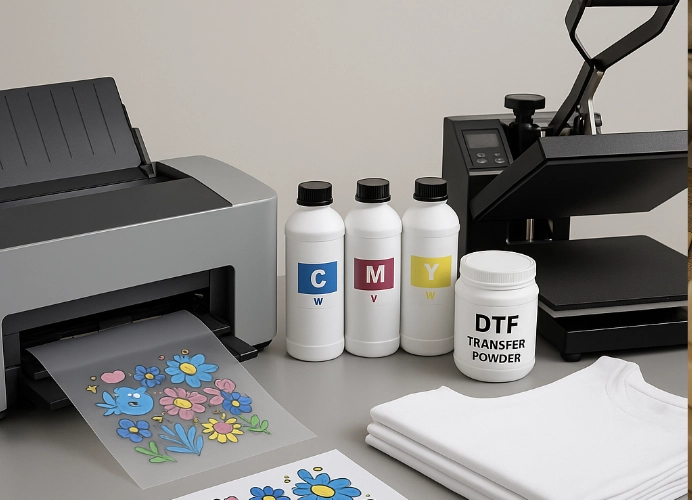
DTF Printer: The core of printing designs onto film, available in various sizes and specifications.
Powder Shaker & Curing Oven: Helps ensure consistent and quick powder application and drying.
Heat Press: An essential tool for transferring designs from film onto shirts. Choose a model that accurately controls temperature and time. Manual presses may result in inconsistent pressure.
Computer and Design Software: Such as Adobe Illustrator, Photoshop for creating designs.
RIP Software for DTF printing that supports white ink and controls ink release.
Design files should be prepared as PNG with transparent backgrounds at 300 DPI.
Approach 2: Outsource DTF Film Printing
A great option for beginners looking to test the market and reduce high investment risks. Screen168 offers printing services to various stores, ensuring quality products and maintenance of equipment for consistent results.
Advantages: No need to invest in expensive equipment, no maintenance worries, start the business immediately.
What you need to do: Design and send files to the screen printing shop, then receive ready-to-use DTF film sheets to heat press onto shirts (only need a heat press).
Important materials to stock:
Blank T-shirts: Find reliable suppliers with various fabric options such as 100% Cotton (soft and comfortable), CVC (durable and less prone to wrinkling), or TK (vibrant colors at affordable prices). DTF printing works on all fabric colors, but starting with white, black, and gray shirts is recommended for easy sales and versatility.
DTF film, ink, and powder: Use high-quality materials to achieve bright and long-lasting prints.
Packaging materials: Shipping boxes, envelopes, tape, and may add value with branded zip-lock bags or thank you cards.
Part 3: Open an Online Store and Market (Online Store & Marketing)
Once you have your products ready, it’s time to open your store to the world!
1. Choose an Online Selling Platform
Marketplace (Shopee, Lazada): Suitable for beginners, with a large customer base and easy to start
Social Commerce (TikTok Shop, Facebook/Instagram Shop): Suitable for building identity and community, easy to create video content for promotion
Website (Shopify, WooCommerce): Suitable for those who want to build a brand seriously, can customize and control everything 100%, but requires more effort in marketing
When selling online, you need a system to make everything smooth, such as: order tracking and delivery scheduling, printing labels for Kerry, Flash Express, or postal services, chat apps to respond to customers like LINE Official, Facebook Page
2. Creating Content and Product Photography
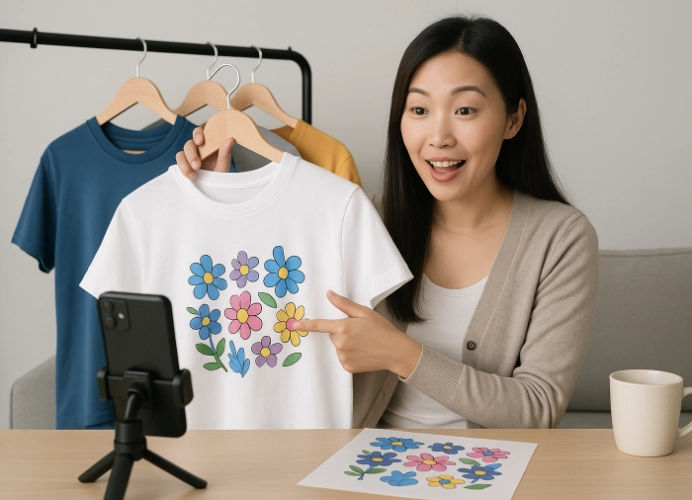
Product Photography: Take clear and interesting photos of the shirts, both flat lay, hanging, or with models wearing them, to show customers how they look in use
Video Content: Create short videos on TikTok or Reels showing the screen printing process, new collections, or behind-the-scenes work, to help increase engagement
3. Work Space
Should have a well-ventilated space, with a table for the printer, oven, and iron clearly separated, shelves or boxes for storing film, glue powder, ink, shirts, and pre-made designs. A clean and organized workspace helps improve the quality of work as screen printers can work without constantly searching for supplies or being in cluttered spaces
4. Basic Digital Marketing
SEO (Search Engine Optimization): Name products and write descriptions using keywords customers often use to search
Social Media Marketing: Promote products and maintain a relationship with followers consistently
Paid Ads: Use Facebook Ads or TikTok Ads to quickly reach new target audiences
Summary
Screen printing t-shirts online with DTF technology is an interesting business opportunity that is not as difficult to start as one might think. However, it requires careful planning, from building a brand, selecting the right production model, to continuous marketing. DTF technology has opened the door for everyone to create high-quality work from a small workspace.
For those interested in starting but not ready to invest in large machinery, or who want a partner skilled in printing to reduce this burden, at Screen168, we offer high-quality DTF film printing services, along with consultation to help your brand start strong and smoothly. Contact us today to start creating your dream t-shirt brand!
If you are creative and willing to invest a little, the DTF system is a choice that helps you start an online t-shirt business. Most importantly, you need a “system” and “consistency,” and your business will grow steadily.
Ready to Print Custom DTF with Screen168 Bangkok?
Single pieces to bulk wholesale. Free artwork file check and instant online pricing 24/7.
🚀 View Sizes, Prices & Order Online→