
Stand Out in the Clothing Market: Why DTF Screen Printing is the Answer
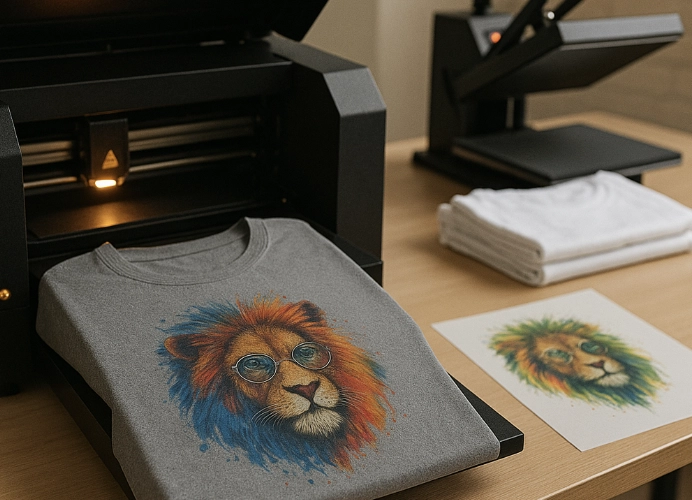
Creating a clothing brand in today’s highly competitive market requires making your products unique and distinctive. Beyond appealing design, the quality of screen printing is a critical factor that can elevate your brand’s image. Among various screen printing techniques, DTF (Direct to Film) has emerged as an innovative solution that comprehensively meets the needs of clothing brand owners.
In an era where consumers are constantly bombarded with digital media, it is not an optional but a necessary requirement for your clothing brand to stand out. If people can immediately recognize and remember your brand when they see similar clothing, it increases the chances of repeat customers and boosts long-term sales.
The elements that make a clothing brand stand out include:
Brand Identity — brand name, logo, color tone, lines, and communication voice
Product Quality — materials, production techniques, durability
Production Innovation — using new technologies that meet your needs, such as screen printing and digital printing
Effective and targeted marketing — especially SEO, content, and social media
Customer Experience — after-sales service, warranty, and attention to detail
In this article, we will focus on why DTF (Direct to Film) screen printing is one of the technologies that can help make your clothing brand stand out — in terms of quality, flexibility, and market growth opportunities.
First, let’s understand what DTF (Direct to Film) is and how it works?
DTF is a printing technique that prints images or patterns onto a special film (Film) using specific ink. Then, a special adhesive powder is sprinkled over the ink and heat-treated. Once the design is ready, the film is heat-pressed onto the fabric, and the heat melts the adhesive, permanently bonding the design to the fabric fibers.
This uncomplicated process gives DTF an advantage over other techniques and explains why it is the answer for creating your clothing brand.

DTF stands for “Direct to Film” or “Printing Directly onto Film.”
The DTF process involves the following main steps:
Design the image — use high-quality digital files (such as PNG, PSD, EPS)
Print onto film — use special ink (usually pigment ink) to print color layers (CMYK) and white ink layers on a specially coated PET film
Apply adhesive powder — sprinkle adhesive powder on the wet ink to ensure the ink adheres to the fabric after heat pressing
Initial heat treatment (pre-cure) — melt the adhesive and bond it to the ink on the film
Place the film on the fabric and heat press — use appropriate temperature and time to transfer the design to the fabric. Some fabrics may require re-pressing to achieve the best results; test various settings and record the optimal pressing time.
Peel the film — when the fabric is cool or warm (depending on the film), peel off the film, leaving the design on the fabric.
One notable advantage of DTF is its versatility in working with various fabric types, such as cotton, polyester, blended fabrics, and even dark-colored fabrics, without the need for pre-treatment.
Comparing DTF with other techniques
To understand how DTF differs, let’s compare it with commonly used techniques:
Screen printing is ideal for large quantities of the same design, with lower costs per unit when printing in bulk. However, it requires preparing screens, and multiple layers of ink can be challenging for intricate designs, as the screens may break.
DTG (Direct to Garment) prints directly onto the fabric without using film. Sometimes pre-treatment is necessary for dark-colored garments, which adds preparation time. DTG is more suitable for cotton fabrics.
Sublimation provides vivid colors when used with polyester fabrics, but it is only suitable for 100% polyester or specially coated fabrics, making it ideal for sports and competition wear.
DTF, on the other hand, excels in the following areas:
Flexibility in materials — works with various fabric types and handles dark-colored fabrics well.
Supports detailed designs — suitable for complex designs due to direct printing from computer commands onto film.
No pre-treatment required.
Therefore, DTF is a compelling choice in many cases, especially for brands seeking flexibility and cost-effectiveness in non-industrial quantities.
5 Reasons Why DTF Meets the Needs of Creating a Distinctive Clothing Brand
1. Unlimited Design Freedom

Traditional printing methods, such as screen printing, often have limitations in terms of the number of colors used or the resolution of the design. However, DTF (Direct to Film) can handle full-color prints or intricate gradient designs with ease, accurately and realistically transferring complex and unique brand designs onto clothing.
DTF excels at printing gradients, shadows, highlights, or fine details because the printing process on film allows for the easy use of intricate elements (such as cat whiskers or complex graphic patterns) that would be difficult to achieve with manual screen printing.
Moreover, the use of pigment ink and a white ink layer ensures vibrant colors even on dark fabrics, enhancing the “premium” feel of the brand.
2. Printing on Various Fabric Types (Universal Application)

One of the challenges with other printing methods is the limited types of fabric they can use. However, DTF can print on almost any type of fabric, including cotton, polyester, blends, nylon, or even denim. Additionally, it can print on fabrics of any color, from white to light and dark shades, thanks to the base white ink printing, which ensures the design stands out and is not dulled by the fabric’s color.
3. Sharp and Durable Print Quality
DTF prints are high-resolution and vibrant, with a flexible quality when applied to fabric, making them comfortable to wear. Moreover, the durability of the prints after washing and use is excellent, ensuring that your brand’s products look good and maintain quality over time.
If the printing, curing, and pressing processes are done perfectly, the prints will adhere firmly, remain flexible, and withstand multiple washes without peeling or fading. Durability is a key selling point; if your shirts maintain their quality after multiple washes, customers will talk about and trust your brand more.
4. Support for Small Batch Production (No Minimum Order)
For new clothing brands or those looking to test the market with limited new collections, DTF (Direct-to-Fabric) is the most cost-effective solution. There’s no need for screen setup, allowing for single-piece orders (No Minimum Order) at a reasonable per-unit cost, which reduces the risk of overstocking inventory.
New clothing brands often have uncertain sales volumes. Using techniques that require large production orders or high per-unit costs can be a significant burden. DTF helps you:
Produce in small quantities — reduce inventory risks
Easily change designs — quickly redesign
Support made-to-order work — produce immediately upon customer order
This flexibility allows brands to experiment with new styles or adapt to trends quickly.
5. Fast Production Speed
The DTF process is quick and straightforward, especially for urgent small to medium-sized orders. This enables your brand to respond to rapidly changing fashion trends (Fast Fashion) or produce items for special events on time.
6. Cost-Effective Investment and Low Hidden Costs
While investing in high-quality DTF equipment may be expensive initially, the benefits include:
Reduced costs for preparing printing plates or multi-color screens, reducing waste from test prints
Reduced inventory storage issues due to easy design changes
In the long term, efficient use of DTF keeps per-unit costs competitive.
Summary: Elevate Your Brand with DTF
Choosing to use DTF printing is not just about selecting a printing technique but investing in quality and flexibility that helps your clothing brand offer standout, high-quality products that effectively meet market demands. If you’re looking for a way to make your products unique and memorable, starting with DTF printing is a smart step towards building a successful clothing brand.
Ready to Print Custom DTF with Screen168 Bangkok?
Single pieces to bulk wholesale. Free artwork file check and instant online pricing 24/7.
🚀 View Sizes, Prices & Order Online→