
Common Issues in DTF Printing
Troubleshooting DTF Printing Issues
Today, we will explore other common problems you might encounter while working with DTF T-Shirt Printing, such as improper storage methods that can lead to decreased product quality and further issues.
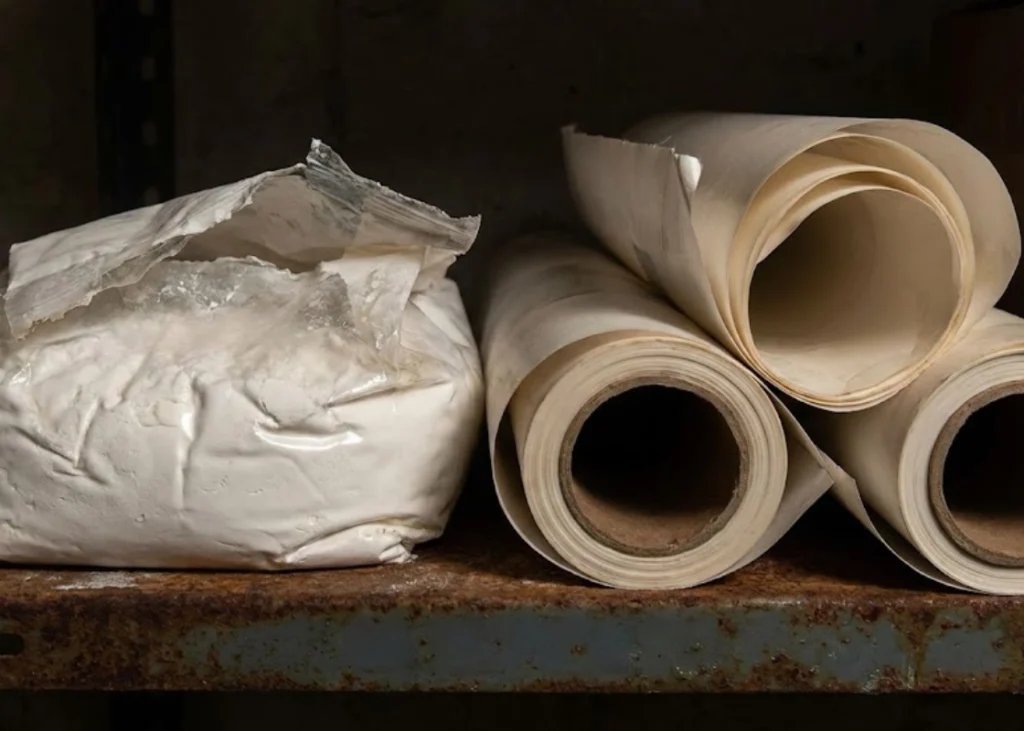
1) How to Store Film and Hot-melt Adhesive Powder
Answer:
The primary concern is moisture prevention. Film should be stored in sealed bags in a low-humidity room. Hot-melt adhesive powder should be tightly sealed after each use. Film exposed to moisture will result in poor ink adhesion or color separation. In humid areas, such as the southern region, a dehumidifier should be installed in the workspace.
2) How Many Washes Can DTF T-Shirt Printing Withstand?
Answer:
If high-quality equipment and proper procedures are used, DTF prints can withstand over 50-80 washes.
Factors that improve wash durability include:
- High-quality hot-melt adhesive powder
- Consistent heat application
- Re-pressing for 3-5 seconds after film removal
- Proper amount of white ink underbase
3) Why Do Some Prints Come Out with Incorrect Colors?
Answer:
There are four main reasons:
- Incorrect color settings in RIP software
- Moisture absorption by the film, so proper material storage is crucial
- Expired ink, check expiration dates regularly and avoid using expired ink
- Printer not calibrated regularly
For precise colors, perform color calibration yourself or use factory reference sets.
4) Which is Better: Cold Peel or Hot Peel DTF?
Answer:
Neither is universally better, but they suit different needs.
Cold peel provides a sharper surface, ideal for premium brand work.
Hot peel is faster, suitable for shops with high-volume orders.
For beginners, cold peel is recommended due to easier control, but it depends on the specific screen printing focus of the shop.
5) How to Cut Film and Store Prints After Printing?
Answer:
After heat pressing, wait for the adhesive to cool before cutting. Store the printed sheets flat without bending or folding. Keep them in dry envelopes, away from direct sunlight.
Be cautious of adhesive sticking together.
6) Why Do Some Customers Say DTF Prints Are Stiff?
Answer:
This can be due to:
- Excessive use of hot-melt adhesive or low-quality adhesive
- Excessive ink usage
- Low-quality film
- Overheating during pressing
For softer prints, use matte film and premium-grade hot-melt adhesive.
7) What Are the Differences Between 30 cm and 60 cm DTF Printers?
Answer:
30 cm (A3 / 33cm Printer)
Suitable for startups with lower investment but slower printing speed, ideal for retail sales focusing on single or double-digit orders.
60 cm (Printer Roll to Roll)
Suitable for large-scale production, can be paired with a shaker, twice as fast, and better quality control.
For retail or general online orders, a 30 cm printer is sufficient, but for brand work or transferring to other shops, a 60 cm printer is necessary.
8) DTF Printing Workflow
Answer:
- Print the design on the film.
- Pre-press the shirt.
- Place the film on the shirt and press for 10-15 seconds.
- Remove the film after cooling.
- Re-press for 3-5 seconds for maximum wash durability.
9) Tips for Impressing Customers with DTF Prints
Answer:
- Use high-quality film and hot-melt adhesive.
- Set the white layer thickness appropriately.
- Heat press the adhesive until it melts smoothly.
- Re-press after film removal.
- Inspect each print before delivery.
- Store prints flat and dry.
- Cut edges neatly and beautifully.
Good DTF prints will impress customers with their smoothness, softness, vibrant colors, and non-sticky feel.
10) Will Customers’ Home Irons Peel Off the Prints?
Answer:
Yes, if customers use a standard household iron without sufficient pressure or heat, and the shirt is damp.
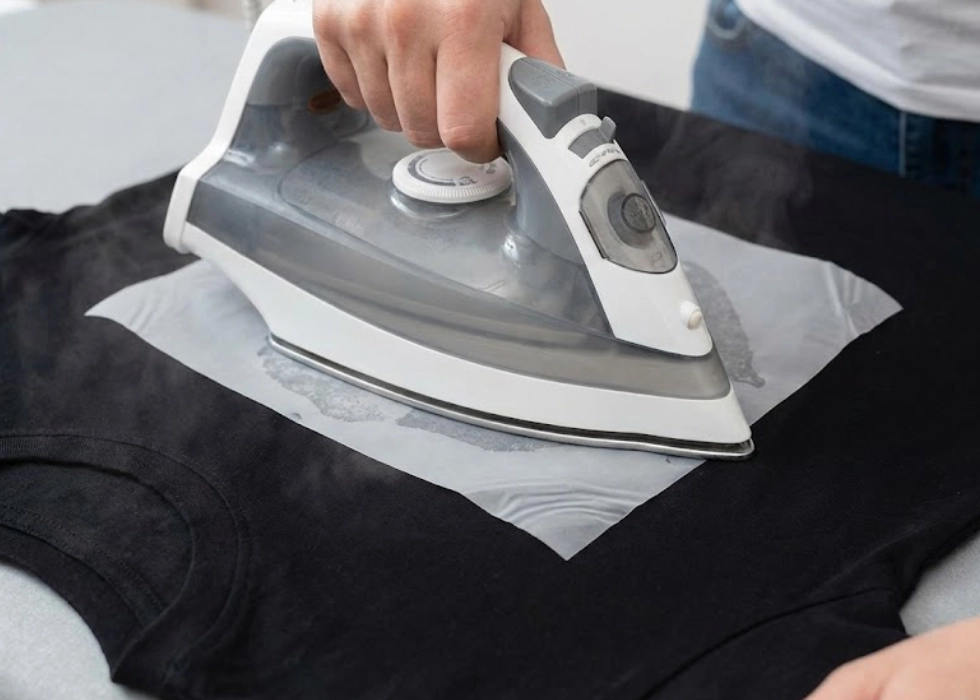
If customers need to iron it themselves, provide a hot/warm peel transfer sheet and clear instructions, such as pressing at 160°C for 10-15 seconds and peeling while hot or cool depending on the film type.
11) Is DTF More Durable Than Other Printing Methods?
Answer:
DTF is more durable than:
- Flex printing (as Flex can easily peel off when stretched)
- Traditional heat transfer printing
- Low-quality silk screen printing
DTF is comparable to DTG but at a lower cost per piece.
Most factories agree that DTF is currently the most cost-effective system, providing high-quality prints while controlling production factors.
12) How to Fix DTF Printing Errors?
Answer:
First, identify the cause. Then, the solution depends on the issue:
- Pressing not adhering at corners → Re-press the specific area
- Bubbles in the print → Re-press with increased pressure
- Incomplete color → Re-print, no repair method
- Excess adhesive → Use wax paper to re-press and smooth the surface
DTF is not a perfect system, but proper initial settings minimize errors.
13) What Do You Need to Start a DTF Printing Service?
Answer:
Equipment: printer, film, hot-melt adhesive, heat press, ironing table, packaging envelopes, workflow steps, job queue management system, file submission system (Google Drive/LINE OA/website), pricing per sheet, quality control before delivery.
When purchasing film, adhesive, and ink, ensure the supplier is consistent to avoid affecting your work quality. Screen168 offers high-quality film, adhesive, and ink to enhance your printing efficiency.
Conclusion
DTF is a printing system that meets the needs of modern t-shirt shops, as it is easy to use, produces vibrant colors, and allows for easy cost control while handling small orders. However, it requires a detailed understanding of technical aspects such as white layer settings, film moisture, adhesive type, pressing temperature, and post-printing storage. With a solid understanding, you will produce sharp, durable, and customer-satisfying prints.
Ready to Print Custom DTF with Screen168 Bangkok?
Single pieces to bulk wholesale. Free artwork file check and instant online pricing 24/7.
🚀 View Sizes, Prices & Order Online→